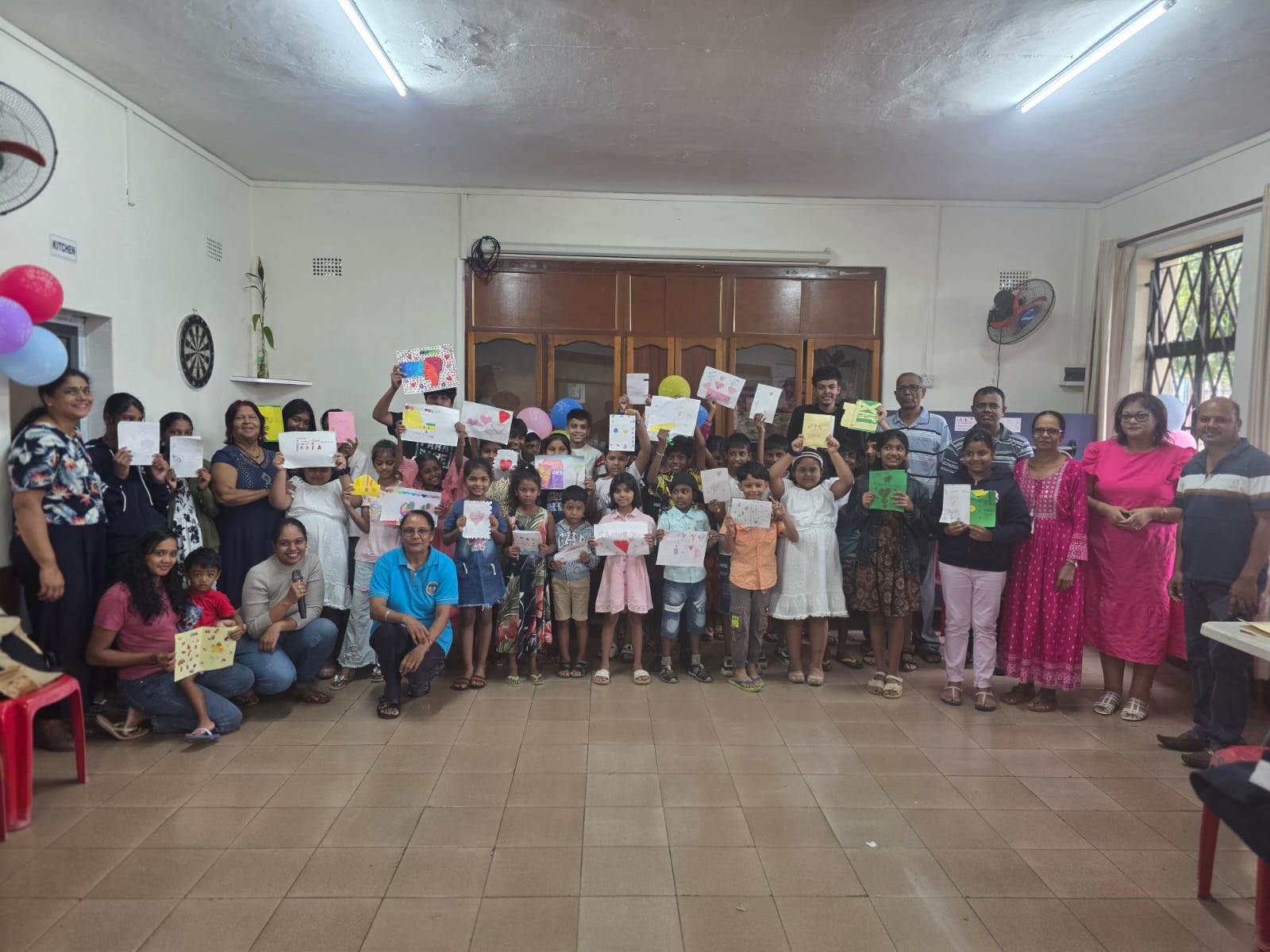
In today’s world, the role of youth in shaping the future has never been more vital. Education alone cannot prepare young minds for the challenges they will face; they also need leadership, civic responsibility, and the ability to advocate for peace. Recognizing this, the Global Peace Chain (GPC) introduced a transformative initiative under the guidance of Lerato Maris, a Global Peace Chain Ambassador from South Africa. This program aimed to teach children that advocacy through peace dialogue is not just a skill—it is a form of empowerment and a pathway to a meaningful career.
I had the distinct honor of working with these young participants, guiding them through exercises that linked personal ambition with community impact. One of the most engaging activities asked children to dress up as the professionals they aspired to become, whether doctors, teachers, environmentalists, or leaders. This simple yet profound exercise allowed children to see the connection between dreams, action, and societal contribution, inspiring them to recognize themselves as future agents of change.
As Nelson Mandela famously said:
“Education is the most powerful weapon which you can use to change the world.”
This initiative echoed Mandela’s philosophy, showing that when education is paired with empowerment, mentorship, and civic engagement, children develop the capacity to envision a peaceful, just, and proactive society.
One of the program’s most innovative aspects was helping children connect their personal aspirations with leadership and societal contribution. Dressing up as their future selves was more than imaginative play—it encouraged them to think critically about the roles they could play in shaping the world.
A child aspiring to become a doctor realized leadership involves empathy, service, and responsibility. Another, dreaming of becoming a teacher, saw that nurturing minds is a form of societal empowerment. Even the youngest participants, who might have struggled to articulate abstract ideas of peace, expressed themselves through role-play, demonstrating that leadership is accessible to all, regardless of age.
The exercise also reinforced that leadership is not a title but a mindset. Children learned that even small actions—helping a friend, resolving a conflict, or contributing to a project—can spark meaningful change. By experiencing this early, they internalized the idea that they are already agents of positive transformation in their communities.
A central theme of the initiative was demonstrating that peace dialogue is a form of empowerment. Many children perceive advocacy as something distant or abstract, reserved for adults in offices or conferences. This program shattered that misconception, showing that even young voices have the power to influence change.
Through interactive discussions and role-playing exercises, children explored challenges in their communities and brainstormed solutions. Even children as young as 7 or 8 articulated ideas about conflict resolution, fairness, and empathy. They came to understand that peace is a skill that can be practiced and applied daily, reinforcing the idea that leadership and advocacy are inseparable.
As Mahatma Gandhi once said:
“Be the change that you wish to see in the world.”
Through these activities, children learned to embody Gandhi’s words—realizing that their ideas, actions, and voices can shape the communities around them, even at a young age.
An essential element of this initiative was mentorship. Led by Lerato Maris, children received guidance on connecting ambition with action. Lerato Maris’ experience in youth empowerment and global peacebuilding served as a living example of how dedication, empathy, and civic engagement can lead to meaningful impact.
Mentorship encouraged children to ask questions, reflect on choices, and experiment with creative solutions. It bridged the gap between dreams and action, teaching children that leadership is accessible, actionable, and meaningful. Participants observed that advocacy is not an abstract concept but a daily practice that requires courage, collaboration, and creativity.
The initiative emphasized that every child is part of a larger community, and active engagement is a cornerstone of leadership. Through group exercises, role-play, and collaborative projects, children learned the importance of teamwork, mutual respect, and shared vision.
Participants identified community challenges, proposed solutions, and developed small initiatives, creating a sense of ownership and responsibility. This focus on community engagement aligns with research showing that children who participate in socially-driven, collaborative projects develop higher empathy, leadership skills, and civic awareness. By instilling these values early, the program helps cultivate responsible, proactive, and compassionate future leaders.
Perhaps the most significant impact of this program was the inspiration it sparked among participants. Children left with a renewed sense of purpose, understanding that leadership is not just about personal success but about creating inclusive, equitable, and harmonious communities.
The initiative highlighted that leadership manifests in every act of empathy, every effort to resolve conflict, and every contribution to society. Children were encouraged to ask themselves: “How can I make a difference today?” and “What kind of leader do I want to become?” These reflections helped them internalize that their voices and actions matter now, not just in the distant future.
A unique feature of this initiative was framing peace advocacy as a career and a lifelong skill. Children learned that leadership is closely tied to empathy, dialogue, and creative problem-solving. They explored how advocating for peace can become a meaningful path, combining personal growth, social contribution, and professional development.
By linking peace advocacy to real-world applications, participants saw that they could become leaders in their communities, schools, and eventually on national or global platforms. This approach aligns with GPC’s mission of empowering youth to actively shape a more peaceful, educated, and just society.
Recognition played a central role in the program’s success. Every child’s contribution—whether through dialogue, creative expression, or leadership exercises—was acknowledged and celebrated. This positive reinforcement boosted self-confidence, validated their ideas, and emphasized the importance of every individual’s role in shaping society.
Research consistently shows that when children feel heard, valued, and supported, they develop resilience, initiative, and a proactive approach to problem-solving. By celebrating creativity, ambition, and advocacy, the program helped participants see themselves as capable, responsible, and influential members of society.
Through this initiative, children were empowered to connect their dreams with action, their voices with impact, and their ambitions with responsibility. The combination of mentorship, role-play, dialogue, and community projects provided a holistic approach to youth leadership and empowerment.
By participating, children realized that leadership is not about titles or age—it is about action, vision, and impact. They learned that every small step toward advocacy and peace contributes to the larger goal of building educated, empowered, and harmonious communities.
This initiative, led by Lerato Maris, highlights the transformative potential of youth engagement, mentorship, and peace advocacy. Children learned that advocacy through dialogue, creativity, and community participation is a form of empowerment that builds leadership, empathy, and social responsibility.
Through imaginative exercises, mentorship, and collaborative projects, participants understood that their voices matter, their actions have impact, and they are already leaders in their own right. By nurturing these qualities early, we are not just educating children—we are shaping the leaders, advocates, and changemakers of tomorrow.
Empowered youth truly create an educated, responsible, and peaceful nation, and initiatives like this prove that the future belongs to those who are taught to lead with empathy, vision, and courage from a young age.